Couch Guarding for Pyrenean Mastiffs
Apply the article’s guidance to your own dog. Individual dogs vary.
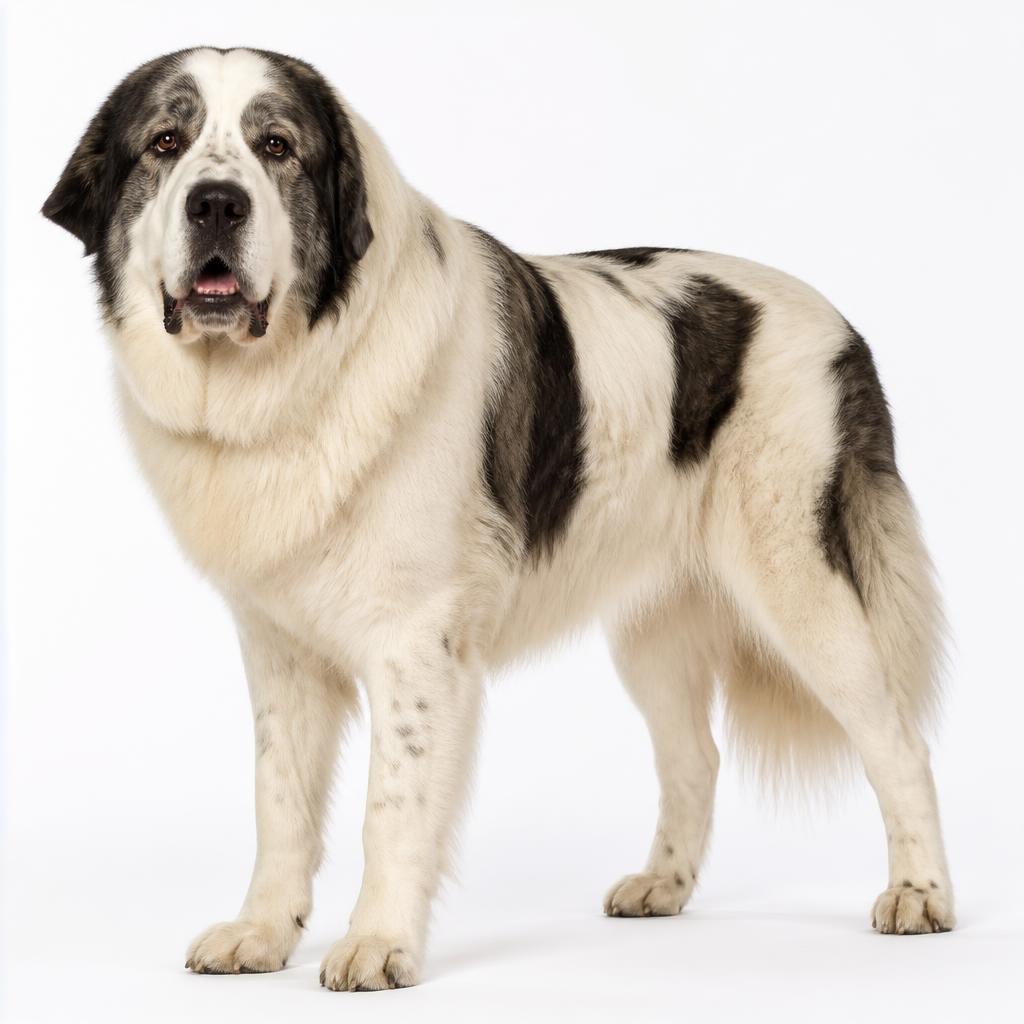
Applying the advice to your Pyrenean Mastiff
Breed tendencies are not predictions about your dog. Use the article’s guidance and focus on what you actually observe.
- Original purpose: These majestic dogs were bred for their immense size, strength, and courage to deter large predators. They were expected to patrol vast territories, making independent decisions to protect their charges without human supervision.
- Breed tendencies related to couch guarding: Guardian Drive, Territorial Drive.
- Territorial Guarding: Pyrenean Mastiffs are highly protective of their home and family, which can manifest as suspicion or aggression towards perceived threats or strangers.
- Resource Guarding: Some individuals may exhibit resource guarding over food, toys, or even people, stemming from their protective nature.
What to observe for couch guarding
- For furniture access and the guarding behavior described in the article, which of these tendencies do you actually see in your Pyrenean Mastiff? Record an example rather than assuming the breed predicts your dog.
- If you observe guardian drive during furniture access and the guarding behavior described in the article, note the situation and which step from the source article you used.
- If you observe territorial drive during furniture access and the guarding behavior described in the article, note the situation and which step from the source article you used.
- If territorial guarding shows up in your home, note whether it appears during furniture access and the guarding behavior described in the article: record the trigger, the source-article step you tried, and what you observed.
- If resource guarding shows up in your home, note whether it appears during furniture access and the guarding behavior described in the article: record the trigger, the source-article step you tried, and what you observed.
Published advice: Why Do Dogs Guard the Couch?
Original by Alicia Collins. Read the original free article. The source text below is unchanged.
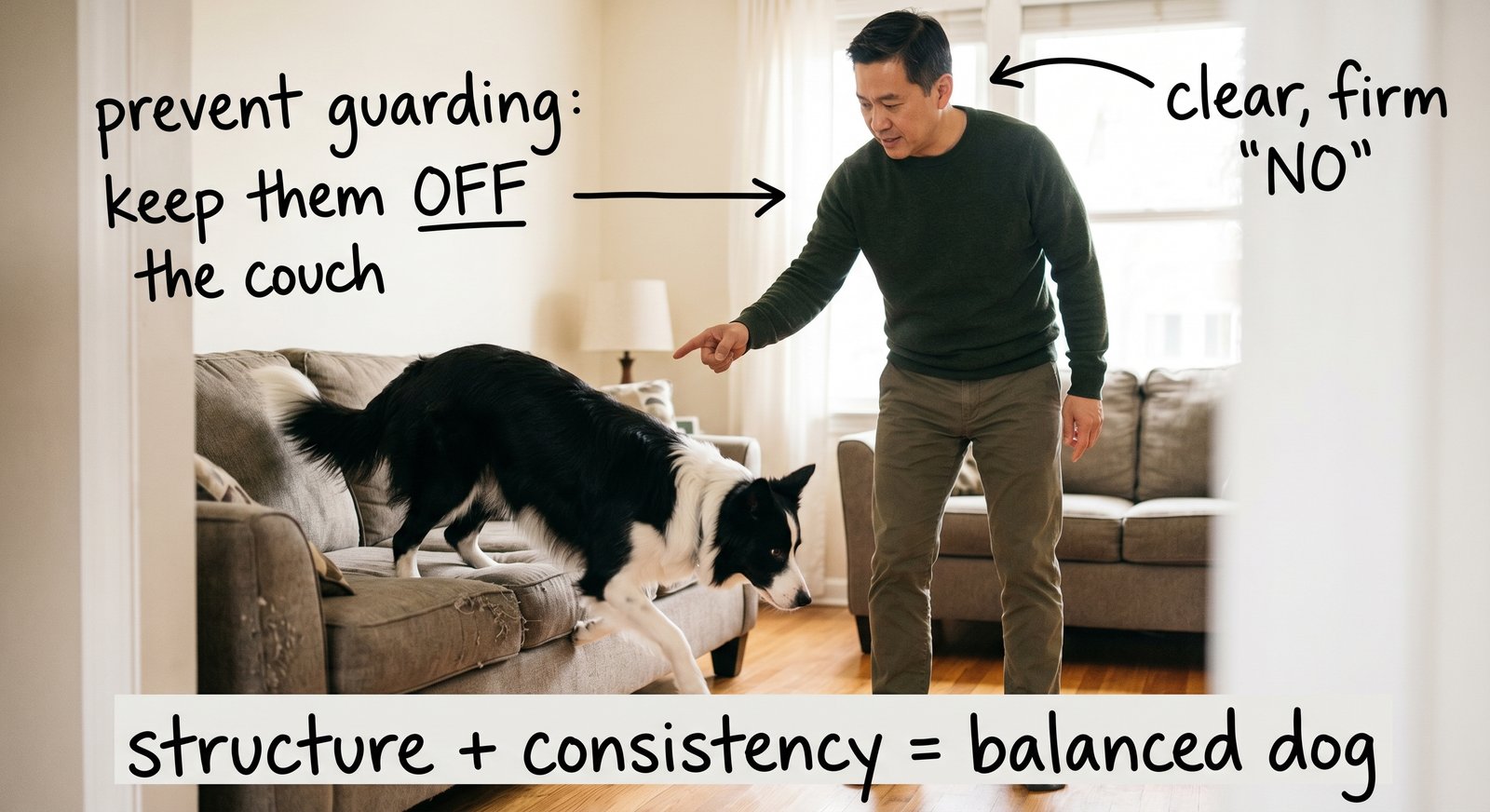
Why the Couch Becomes a Guarding Trigger
Resource guarding is most common with high-value or perceived high-value people, places, or things. The couch can be a trigger for several reasons:
- High-value person nearby — The couch often has a high-value person sitting with the dog
- Ultimate comfort spot — It's simply the most comfortable spot in the house
- Elevated position — Since the couch is elevated, the dog is at human level, which can lead to mixed signals about their position in the family hierarchy
Recognizing the Warning Signs
Fortunately, the warning signs are usually obvious. Resource guarding often starts with growling, but can also include:
- Nipping
- Biting
- Barking
- Lunging
I've seen very young puppies exhibit these behaviors, but the most common age for resource guarding to start is during adolescence, around 7 months. At this stage, the dog is maturing quickly and still figuring out its role in the family dynamic.
How to Address Couch Guarding
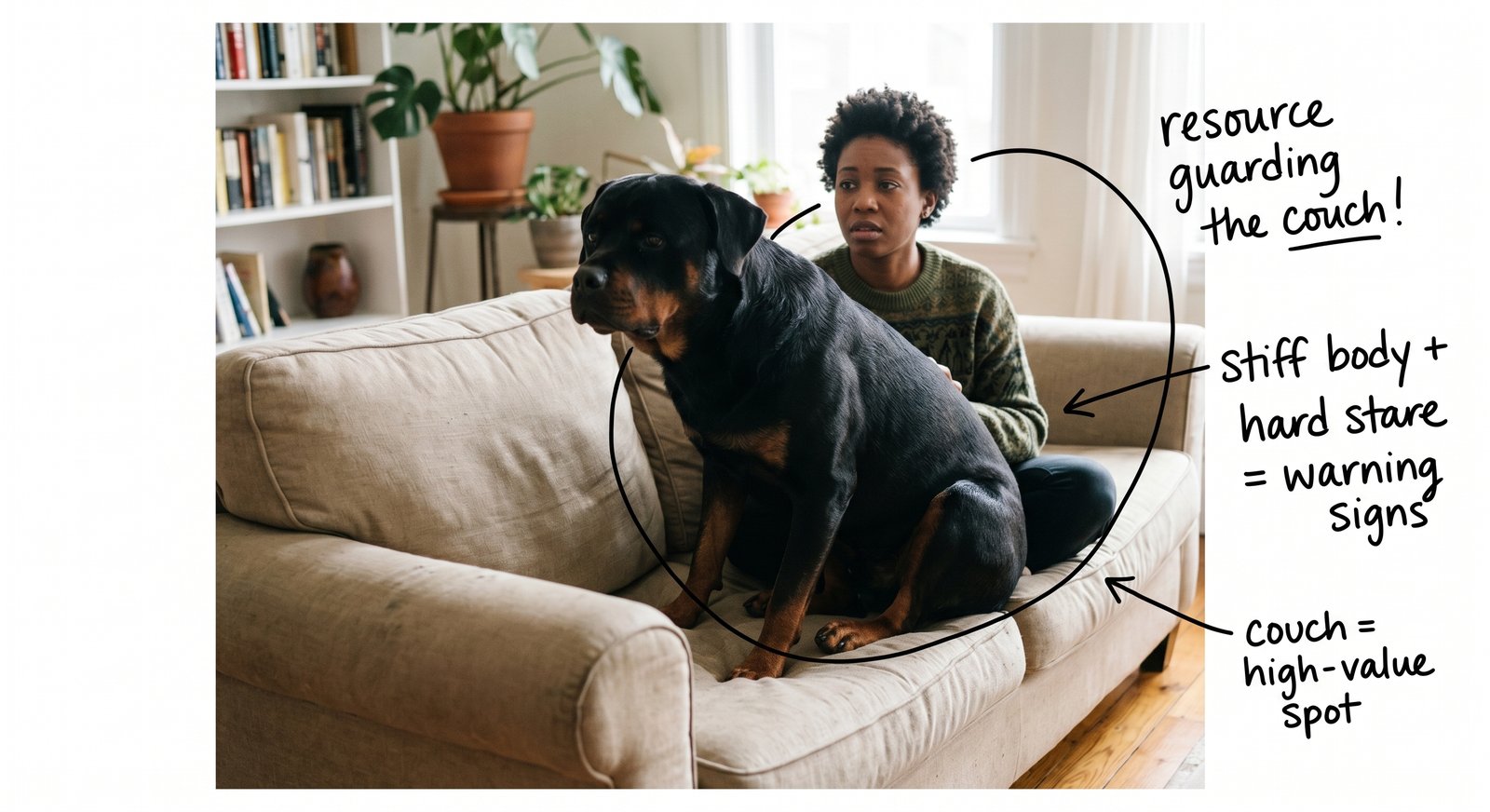
My best advice is to prevent the behavior by not allowing the dog on the couch in the first place, or to stop allowing it if the guarding has already begun.
Dogs learn through conditioned responses (i.e., repetition), so we don't want them to repeatedly engage in unwanted behaviors. In fairness to the dog, I clearly say "NO" so they understand the behavior is unacceptable.
This is also a good opportunity to assess the management style being used to care for the dog and consider implementing more structure.
When to Seek Professional Help
I take resource guarding seriously because it signals that the dog-human relationship is out of alignment.
If an owner lacks direct experience in behavior modification, this is an excellent time to seek help from a professional dog trainer who specializes in addressing resource guarding issues. Early intervention can prevent the behavior from escalating and help restore a healthy dynamic between you and your dog.
Pyrenean Mastiff Couch Guarding Workbook
Add the topic worksheet to your resource library.