Obedience and Management for Chinooks
Apply the article’s guidance to your own dog. Individual dogs vary.

Applying the advice to your Chinook
What to observe for obedience and management
- Use the article’s guidance and note what you observe about your own dog around household boundaries and everyday routines.
Published advice: Obedience vs. Management: Why Most Dog Training Happens When You Aren't Training
Original by Alicia Collins. Read the original free article. The source text below is unchanged.
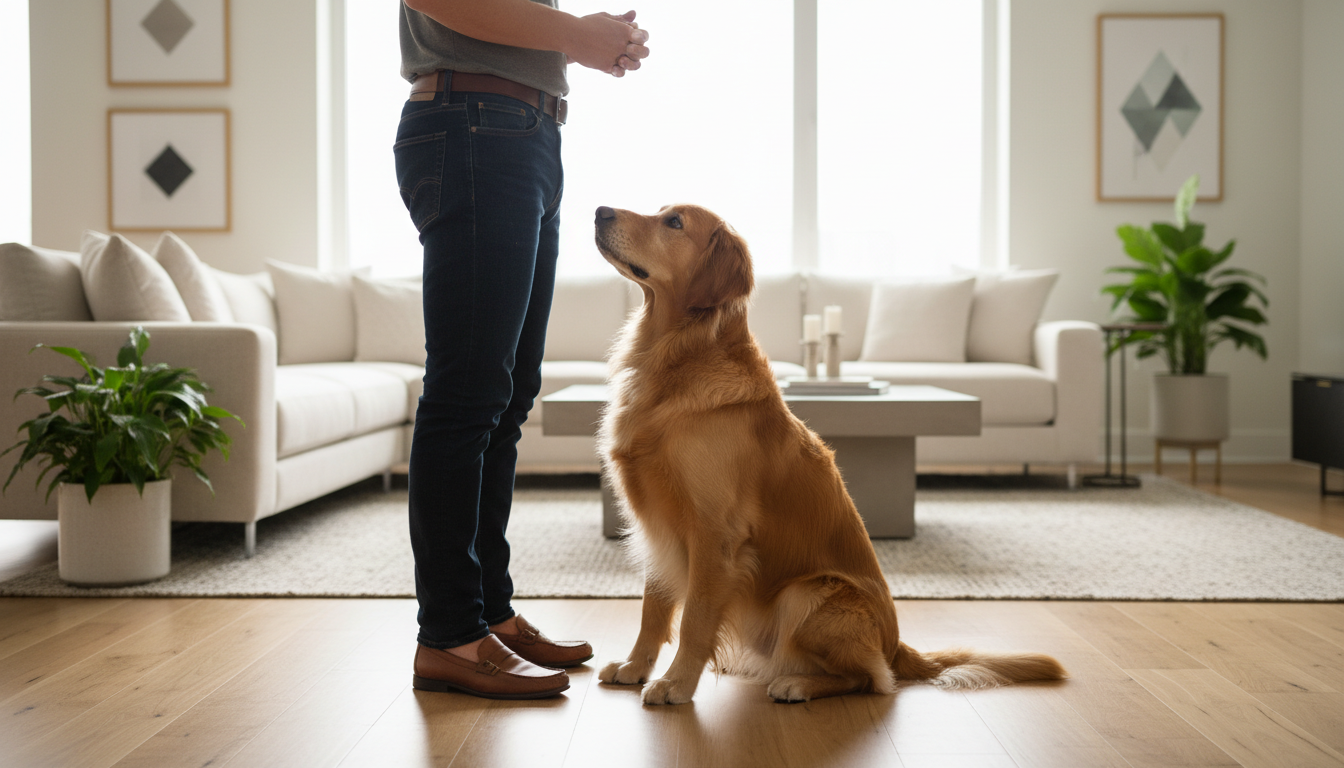
One of the first things I explain during every training assessment surprises people:
Obedience training is only a tiny part of living with your dog.
Most owners think obedience is dog training. Sit. Down. Stay. Come. Heel.
But those commands probably make up only 5–10% of your dog's day.
The other 90–95%?
That's management.
Understanding the difference is one of the biggest breakthroughs you'll have as a dog owner.
Obedience is a Language
At its simplest, obedience is a language that both you and your dog understand.
It consists of a handful of words that mean:
- Do this.
- Don't do that.
- Wait.
- Come here.
- Stay with me.
At its core, obedience is about control. Not harshness. Not domination. Simply leadership and communication.
Dogs thrive when someone clearly answers the question:
"What should I be doing right now?"
Good obedience gives them that answer.
But here's where many people accidentally make training much harder than it needs to be.
Management Makes Obedience Easy
Most behavioral problems aren't solved because we taught another command.
They're solved because we created a lifestyle that makes following commands easier.
If your dog pulls on leash...
If they ignore recalls...
If they're reactive...
If they jump on guests...
If they constantly make their own decisions...
Teaching "Heel" or "Come" isn't enough.
Their everyday life also has to support those lessons.
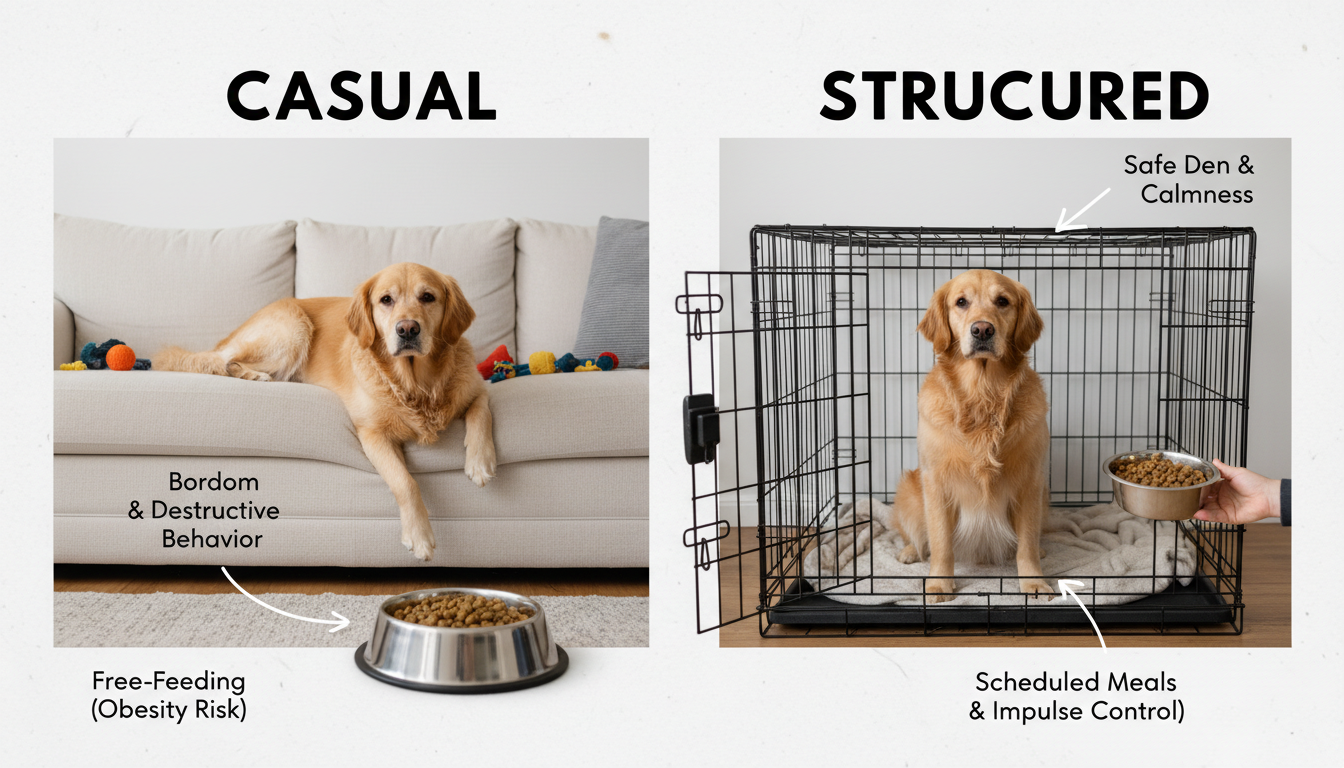
I often tell clients:
"I don't have strong feelings about whether your dog sleeps in your bed."
If everyone is happy and there aren't any behavioral problems, that's your choice.
But if you're asking me to solve obedience or behavior issues, then I start looking at every part of your dog's daily life.
Because some lifestyles naturally build responsiveness.
Others encourage independence.
Neither is morally right or wrong.
They're simply different training environments.
Think of Dog Ownership on a Scale
Instead of asking whether something is "good" or "bad," I prefer asking:
"How structured is it?"
Imagine a scale.
Casual ←────────────────────────→ Structured
The more structure you build into daily life, the more opportunities your dog has to practice listening, waiting, following directions, and accepting guidance.
That makes formal obedience dramatically easier.
Everyday Choices Matter
Feeding
Casual:
- Food available all day (free feeding)
Structured:
- Meals served at scheduled times
- Bowl stays down for about 10 minutes
- If they choose not to eat, it goes away until the next meal
The dog learns that resources have structure and timing.
Equipment
More Casual:
- Harness
- Flat collar
Moderately Structured:
- Martingale collar
- Slip lead
More Structured:
- Training collar (when properly introduced)
- Head halter
Different tools create different levels of communication and control. The best tool depends on the individual dog, but generally speaking, more structured equipment makes obedience easier because communication becomes clearer and more consistent.
Walks
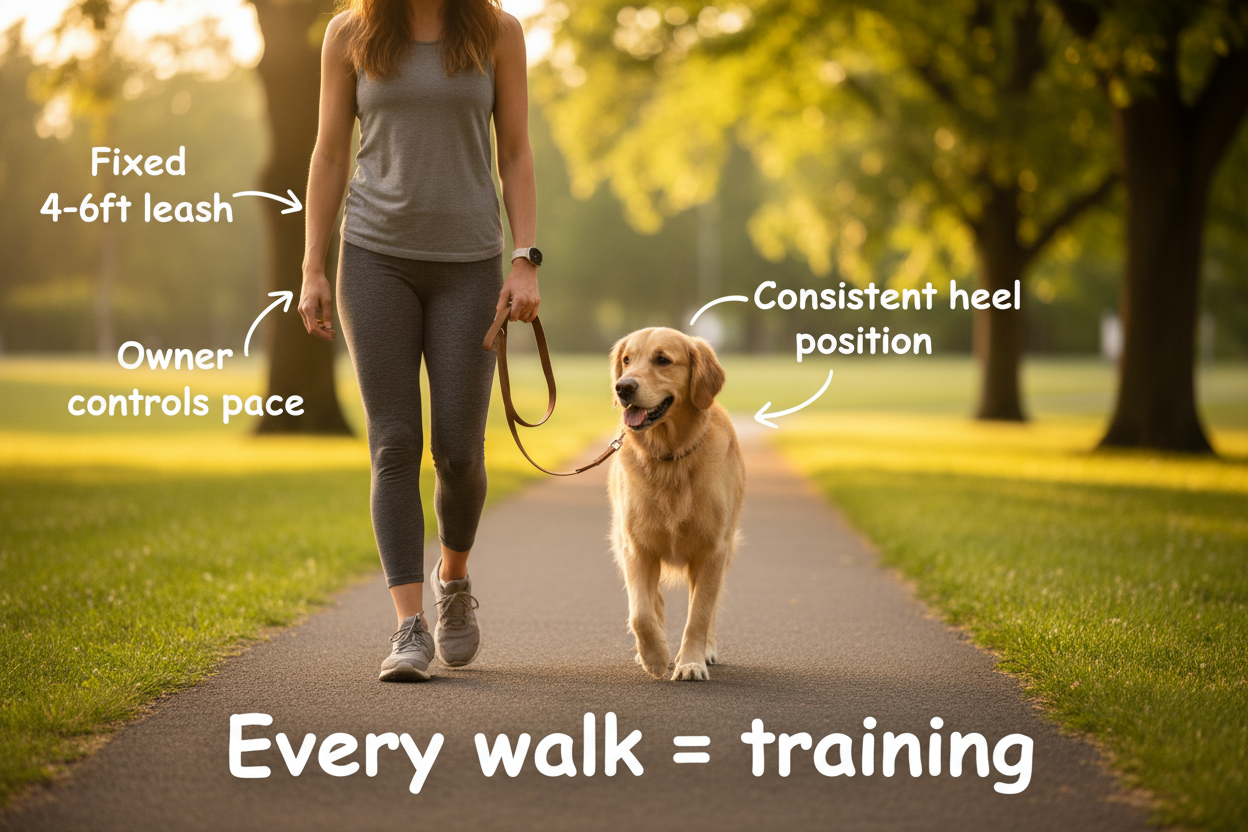
Casual:
- Retractable leash
- Long wandering leash
- Dog chooses direction and pace
Structured:
- Fixed 4–6 foot leash
- Consistent heel position
- Owner controls direction, speed, and stopping
Every walk becomes hundreds of small obedience repetitions.
Sleeping
Casual:
- Wherever they feel like sleeping
- Couch today
- Bed tomorrow
- Owner's bed whenever they choose
Structured:
- Crate
- Designated dog bed
- Predictable sleeping location
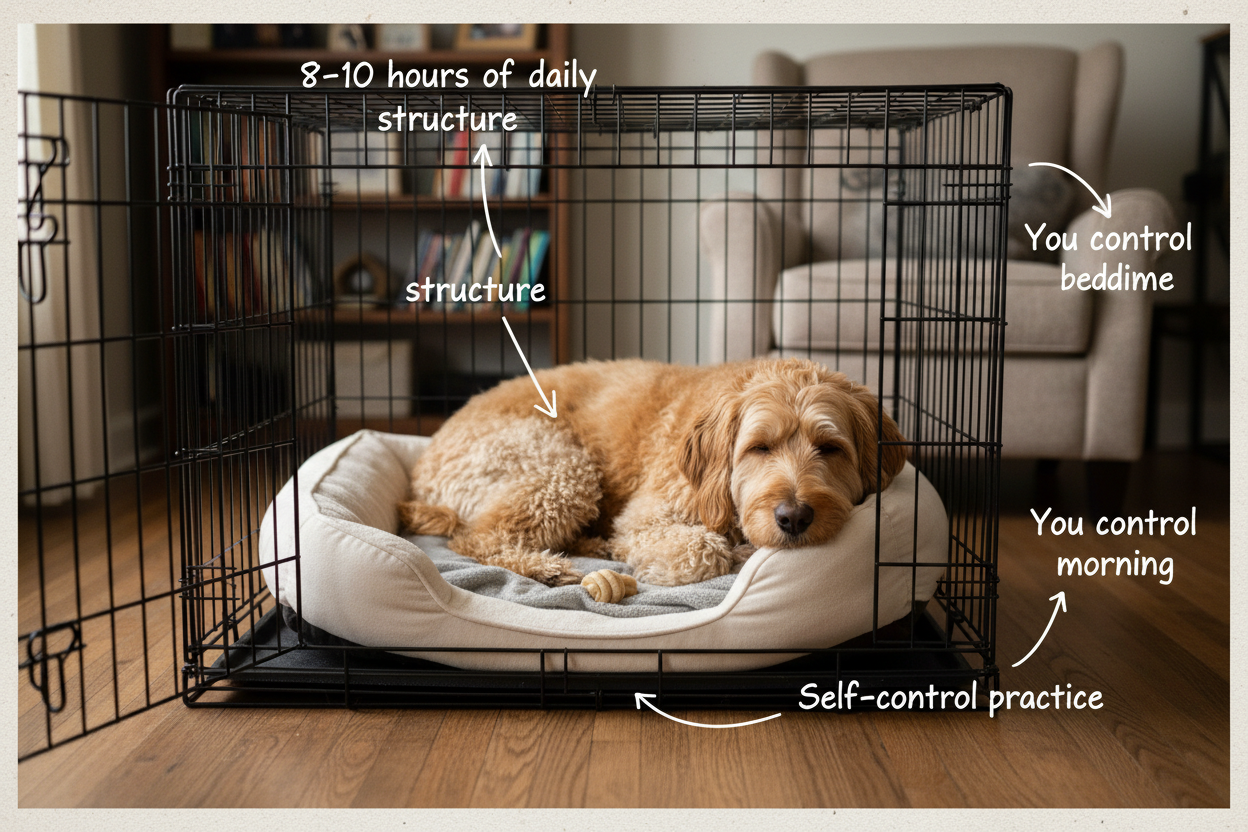
One of my favorite "cheat codes" for obedience is crate training at night.
Think about it.
You just structured eight to ten hours of your dog's day.
You decide when bedtime happens.
You decide when morning begins.
You direct the first potty trip.
Before breakfast, your dog has already practiced following your guidance several times.
That's powerful.
Potty Routine
Casual:
- Dog door
- Unlimited backyard access
Structured:
- Dog asks to go outside
- Owner opens the door
- Potty happens with purpose before returning inside
Every trip becomes another opportunity for communication.
Learning to Relax
One of the most overlooked skills is simply learning to be calm.
A dog that can relax in a crate while the family cooks dinner, watches television, works from home, or entertains guests is practicing self-control.
That's management.
And self-control carries over into obedience.
Structure Builds Better Behavior
People often think they're being kind by giving dogs unlimited freedom.
Ironically, many dogs become more anxious, impulsive, demanding, and difficult because they're constantly making their own decisions.
Structure doesn't reduce freedom.
It teaches dogs how to succeed.
The more consistently your dog experiences guidance throughout the day, the easier formal training becomes.
Obedience is no longer something you practice for fifteen minutes.
It becomes part of everyday life.
How Structured Is Your Dog?
Score yourself from 1 to 5 in each category.
1 = Very Casual | 5 = Very Structured
- Feeding
- Walking
- Sleeping
- Potty routine
- Crate training
- Equipment
- Household rules
- Waiting politely before doors, meals, toys, or getting out of the car
Mostly 1s and 2s?
Adding just a little more structure will often make training feel dramatically easier.
Mostly 4s and 5s?
You'll probably discover that your dog responds faster, learns new skills more quickly, and requires fewer corrections because they're already accustomed to looking to you for direction.
The goal isn't perfection.
The goal is making obedience easy.
Because when daily life supports training, behavior change happens much faster.
Ready to dive deeper?
Explore our Obedience vs. Management module in the Academy to learn exactly how to build structure into your daily routine—plus get personalized tips for your dog's breed and age.
Chinook Obedience and Management Workbook
Add the topic worksheet to your resource library.