Potty Training for Petit Basset Griffon Vendéens
Apply the article’s guidance to your own dog. Individual dogs vary.
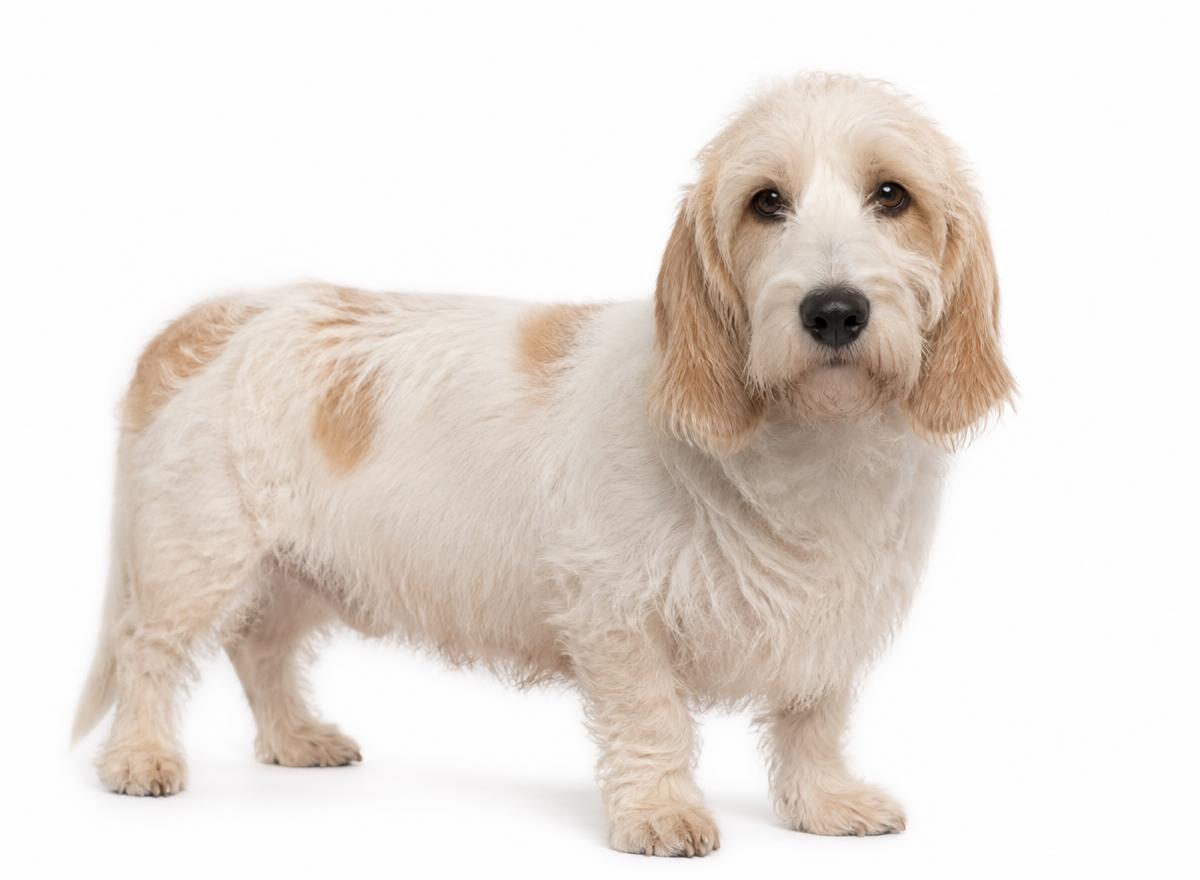
Applying the advice to your Petit Basset Griffon Vendéen
Breed tendencies are not predictions about your dog. Use the article’s guidance and focus on what you actually observe.
- Original purpose: The PBGV (Pee-Bee-Gee-Vee) was developed in the rocky, thorny terrain of the Vendée region of France to hunt rabbit and hare. Their rough coat protected them, while their short legs allowed them to follow scent trails through dense undergrowth, communicating their findings with their unique 'happy' bark.
- Breed tendencies related to potty training: Scent Drive, Independence.
- Scent Drive: PBGVs are driven by their noses. Once on a scent, they can become oblivious to commands, making off-leash reliability difficult and dangerous.
- Independence: As hounds, PBGVs are bred to think for themselves on the hunt. This translates to an independent streak that requires patient, engaging training.
- Wandering & Escape Artists: Their desire to follow a scent can lead them to wander far from home, and they are adept at finding ways to escape yards.
What to observe for potty training
- For potty breaks, supervised freedom and daily routines, which of these tendencies do you actually see in your Petit Basset Griffon Vendéen? Record an example rather than assuming the breed predicts your dog.
- If you observe scent drive during potty breaks, supervised freedom and daily routines, note the situation and which step from the source article you used.
- If you observe independence during potty breaks, supervised freedom and daily routines, note the situation and which step from the source article you used.
- If scent drive shows up in your home, note whether it appears during potty breaks, supervised freedom and daily routines: record the trigger, the source-article step you tried, and what you observed.
- If independence shows up in your home, note whether it appears during potty breaks, supervised freedom and daily routines: record the trigger, the source-article step you tried, and what you observed.
Published advice: Potty Training Tips & Tricks
Original by Alicia Collins. Read the original free article. The source text below is unchanged.
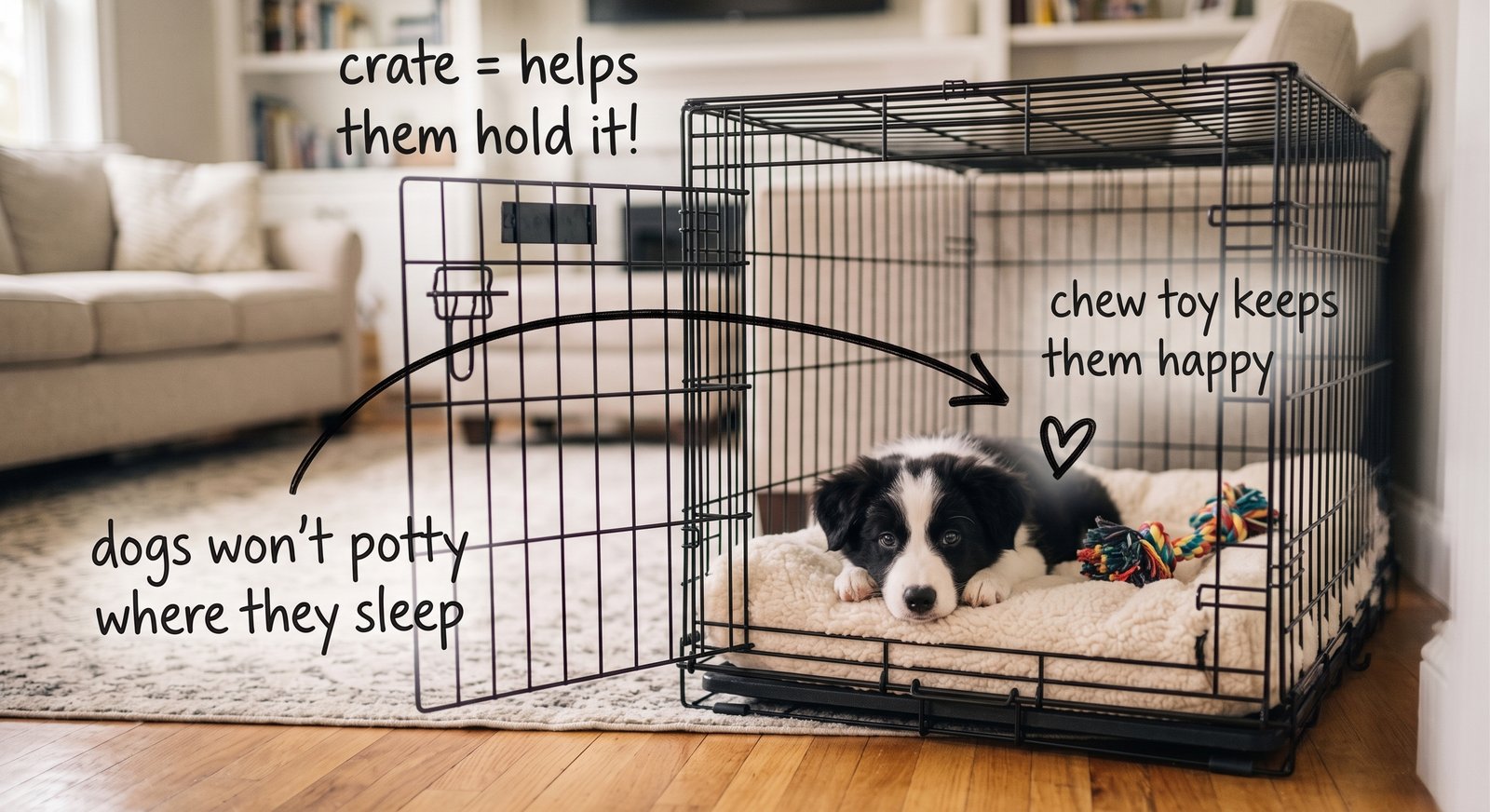
Why Crate Training Is Essential
One of the biggest challenges with a new puppy is potty training. Using a crate is essential, and one of the most common mistakes I see is taking the puppy out too frequently. While this might catch most potty moments, it doesn't actually teach the puppy to wait to go outside. In fact, it can condition them to go more often, reducing how long they can hold it.
That's why I layer in crate time before potty breaks. Since dogs naturally avoid going to the bathroom where they sleep, the crate helps reinforce their ability to hold it.
Overnight Routine
If the puppy whines at night, take them out for a quick, no-nonsense potty break. Keep the lights low, no playtime—just a verbal reward for doing their business and back to bed.
Daytime Routine
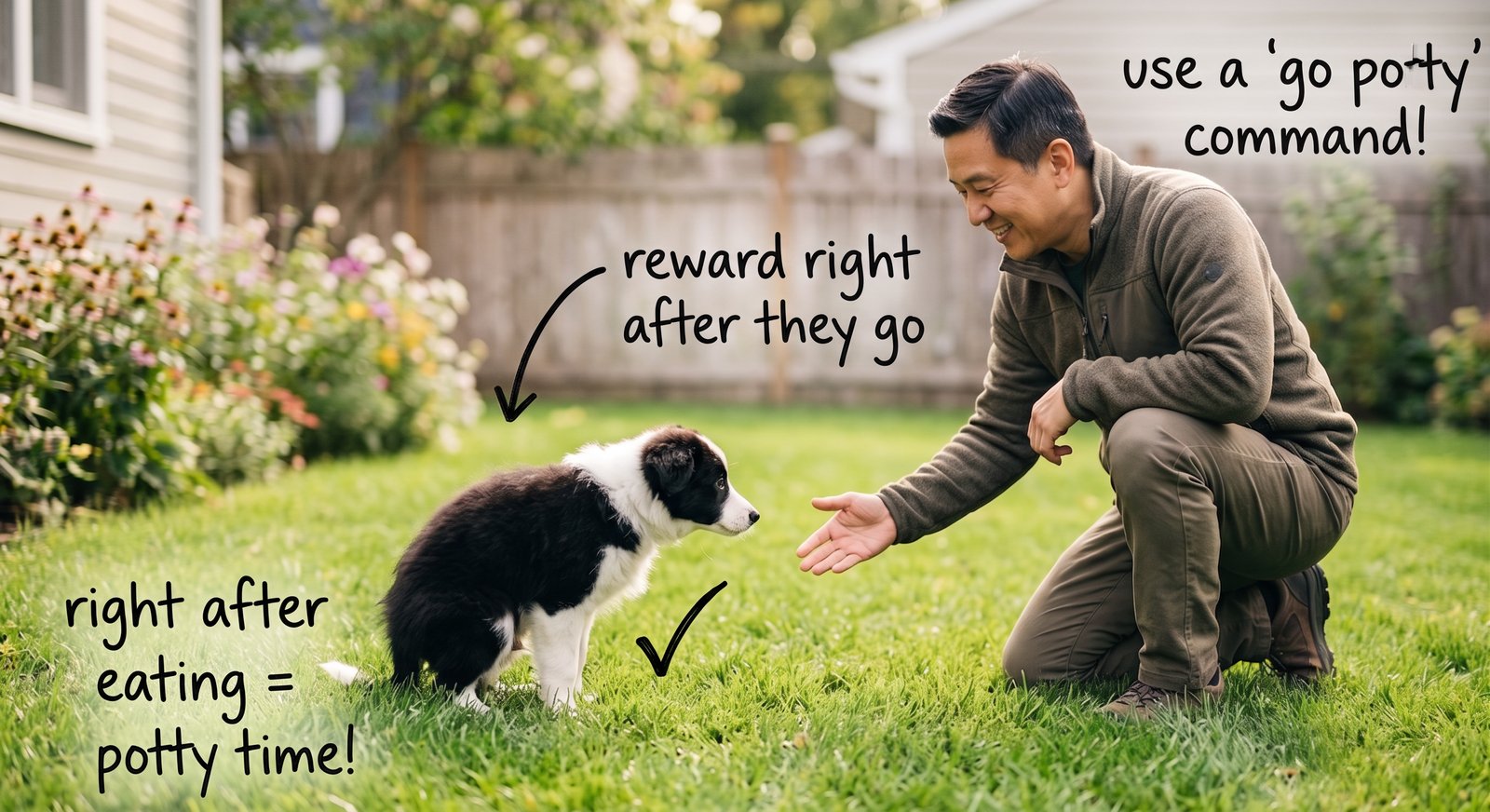
Step 1: Potty Time — Take the puppy outside. Young pups may need to be carried to avoid distractions (some will take three steps and pee!). Supervise and use a "go potty" command, rewarding them when they go. If they go, proceed to Step 2. If they don't go, skip to Step 3.
Step 2: House Freedom — If they pottied outside, they get 30-90 minutes of supervised free time in the house. Start with 30 minutes and increase as they show success holding it.
Step 3: Crate Break — Back in the crate for 15-45 minutes (depending on age and ability to hold it) with a chew or toy to keep them happy.
Step 4: Potty Break — Take outside for a potty break. If they go, proceed to Step 2 (House Freedom). If they don't go, back to Step 3 (Crate Break) and repeat until they do before allowing house freedom. Gradually increase house freedom and playtime as they show success.
Other Tips
- After eating — Puppies usually need to go right after eating, so plan accordingly
- Mid-accident — If you catch them in the act, say NO and carry them outside to reinforce the correct potty spot
- After the fact — If you find an accident after it happened, just clean it up with an enzymatic cleaner—scolding won't help since puppies have short memories
Potty training takes patience, but with consistency and structure, you'll have a house-trained pup in no time!
Petit Basset Griffon Vendéen Potty Training Workbook
Add the topic worksheet to your resource library.